Mi gente,
Recently, I’ve been thinking about that Kanye West interlude on The College Drop Out (2004). You know the one, “School Spirit Skit 2”— it’s lowkey a parody of every academic’s life:
You keep it going, man, you keep those books rolling. You pick up all those books that you're gonna read and not remember and you roll, man. You get that associate's degree, okay? Then you get your bachelor's. Then you get your master’s. Then you get your master’s master’s. Then you get your doctorate. You go, man. And then, when everybody says quit, you show them those degrees, man. When everyone says, "Hey, you're not working, you're not making any money." You say, "You look at my degrees, and you look at my life….Yeah, I'm fifty-two, so what? Hate all you want, but I'm smart, I'm so smart and, and I'm in school. All these guys out here, uh, making money all these ways and I'm spending mine to be smart. You know why? 'Cause when I die, buddy, you know what's gonna keep me warm? That's right, those degrees.
As a two time Ivy League graduate who has often been the only Black scholar in the room—not by choice, but by the system’s design—the multifaceted, dark humor behind this skit is absolutely, and sometimes painfully true. And yet, as he says, “Hate all you want, but I’m smart, I’m so smart.” All of my higher education, from boarding school to graduate school, was funded by each degree granting institution—not my family. I am proudly the product of the New Orleans Public School system, or what it became in the post-Katrina charter school hellscape. Most of my loved ones began calling me “[The Future] Dr. Jones” in college, years before I had even applied to a single Ph.D. program. I never got a Master’s, and nobody ever told me to quit school. Actually, most of the people in my life relentlessly encouraged me to keep pursuing my doctoral degree in the moments when I myself wanted to quit. But the truth is, what keeps me warm at night is “those degrees.” My intellectual aptitude, my winning personality, my language skills, and my degrees have repeatedly secured me opportunities and employment, including my current job. As an anthropologist, what allows me to live my globetrotting life—most of the time on somebody else’s dime—and visit places like Borikén//Puerto Rico, which has been facing record high temperatures, drought, and water rationing this summer is, in fact, “those degrees.”
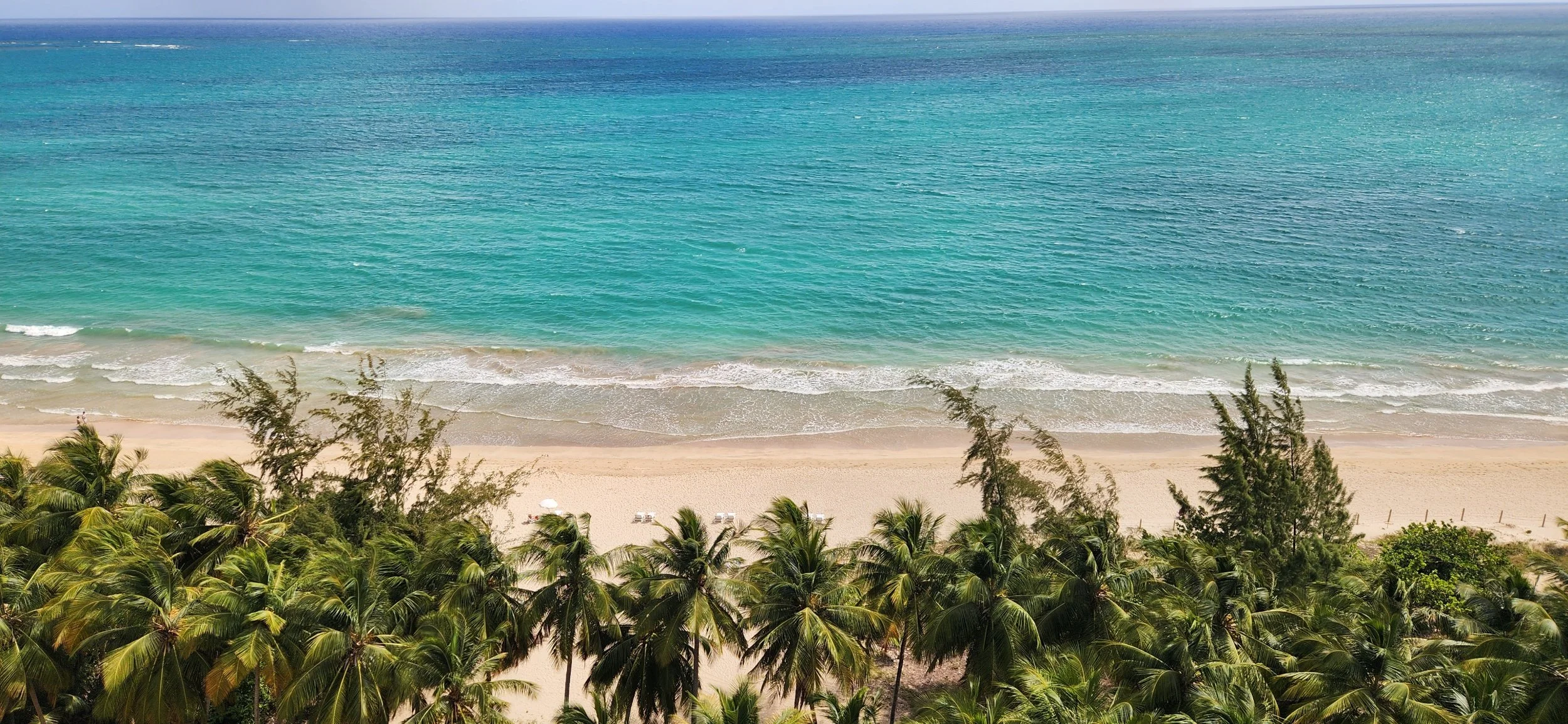
Aguas Saladas. La playa de Isla Verde en San Juan, Puerto Rico. Ain’t no beach like a Caribbean beach.
The truth is, I hate being the only one. It’s lonely and deeply entrenches isolation as a coping mechanism to survive the Ivory Tower’s innumerable violences; I have seen it both attempt and succeed at ending Black life. I am beyond grateful that I made it out alive. Participating in the Taller Entre Aguas (TEA ) x Puerto Rico Organization for the Performing Arts (PROPA) Field School this summer reminded me that I am not alone in the system. I am one of many Black, specifically Afro-Caribbean educators, researchers, librarians, creative practitioners, scholars, curators, and students that exist in relationship with the academy.
While in community, engaging in experiential learning, I fell in love again at the TEA x PROPA Field School in Puerto Rico! There are so many possible interpretations of the title of this essay, and perhaps of all the possibilities, there are a few that prompted you to keep reading. Let me put you out of your misery, dear reader. This essay is very much in the vein of “I Used to Love H.E.R” by Common, except instead of an ode to Hip-Hop, it’s an ode to scholarship. And the truth is, this summer, I fell in love with something that my pursuit of higher education almost stole from me. I fell in love with learning again!
Convened by two ChiRicans—anthropologist Dr. Sarah Bruno, and cultural worker and researcher Melanie Maldonado—the TEA x PROPA Field School facilitated my first return to the Puerto Rican archipelago since completing my dissertation fieldwork in 2023. It reminded why I chose to become a scholar and complete a doctoral degree in anthropology. I remembered that multiple things can be true at once. Although the racist histories that saturate the academic discipline in which I have been trained have left it known as the “Handmaiden of Colonialism,” there are generatively resistant, intellectual and geographical genealogies to which I belong and with whom I align myself therein: the Black, Indigenous, and Caribbean scholars, the archivers of intimacy, the theorists of human existence attending to the quiet, quotidian moments of cultural preservation and transformation—those in whose footsteps I follow, disrupting the legacy of anthropology’s dark origin story.
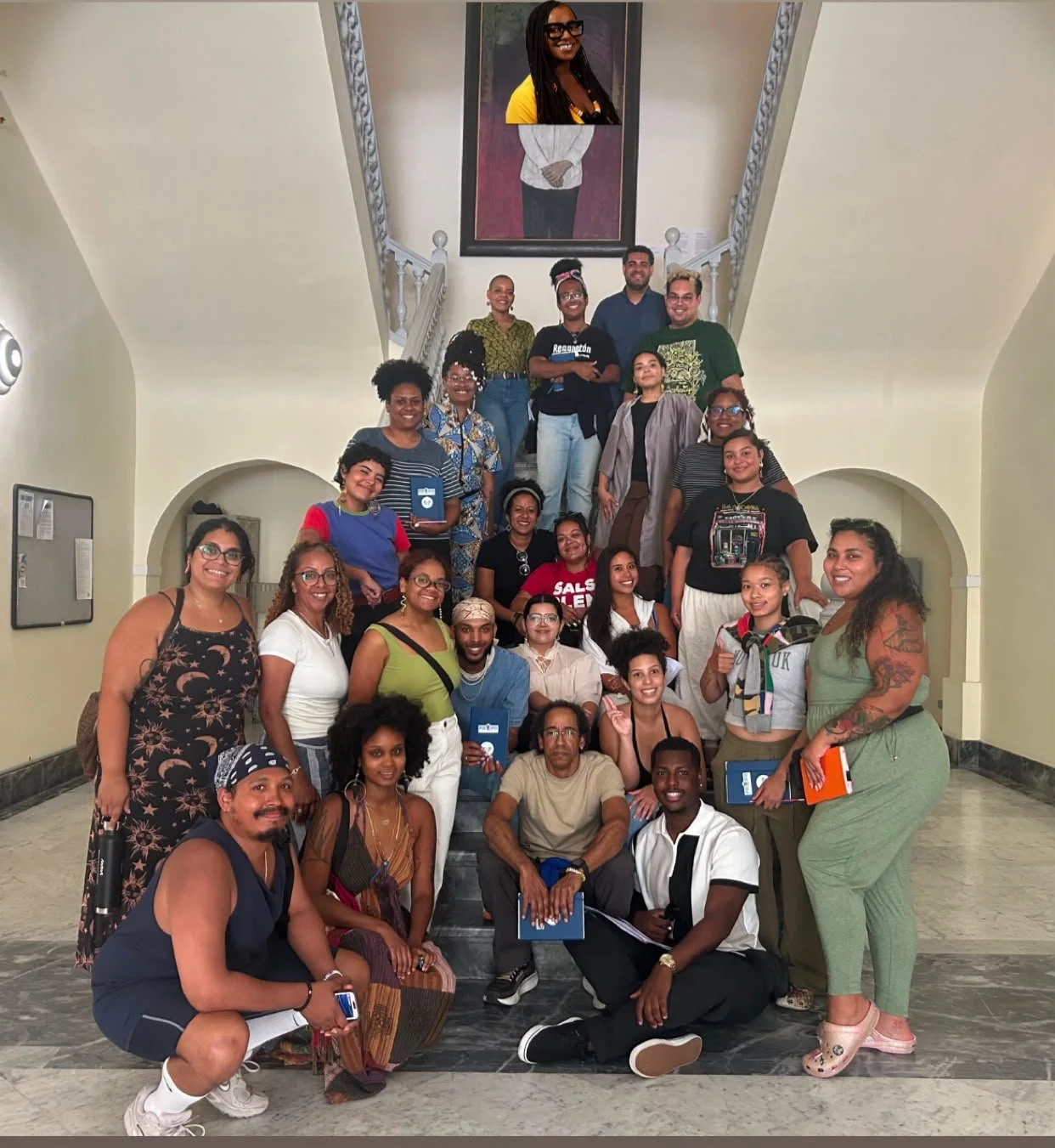
Les Pookies Take the Archive. A group photo of the first TEA x PROPA Field School cohort along with the amazing staff-organizers at the end of our visit to the Archivo General de Puerto Rico in San Juan. Shout out to el corrilo (group of friends)! They are Identified in this photo from top to bottom, left to right: Essah, Ahisamar, Joniel, Daniel, Doza, Ailish, Bárbara, me, Windy, Ivelisse, Elly, Chayanne, Jeanmary, Yesika, Kiana, Tamara, Anais, Tyler, María, Abby, Kellsey, Sarah, Christien, Melanie, Juan, and Nico. Photo credit goes to the iconic Joniel Pacheco Muñoz for photoshopping of a portrait of Essah into this image!
But back to why this whole experience meant so much to me as a recent graduate! The TEA x PROPA Field School felt like adult summer camp. As a child, every summer my mom would put my sister and me in summer camps: academic enrichment camp, church camp, math camp, photography camp, robotics camp, basketball camp, swimming camp, dance camp, Girl Scouts camp, space camp, and a whole bunch of others I can’t remember. And when we weren’t at camp, we went with our daddy, riding around New Orleans on Morris Jones, Jr.’s snack delivery route learning how to run a business. Once, our parents sent us to The Bahamas to spend the summer with our relatives, and they put us in summer enrichment camp there too! We were never idle or left alone at home. Despite how busy my mother was working at the hospital, Gillian made sure that every summer we continued learning, meeting different kinds of people, and strategizing how to exist in different kinds of environments. Sometimes I hated it (being a bookish nerd at a sports camp ain’t for the weak…), but most of the time I loved it. These days, I am in awe of the amount of care and intention that my parents invested into shaping the adults my sister and I have become.
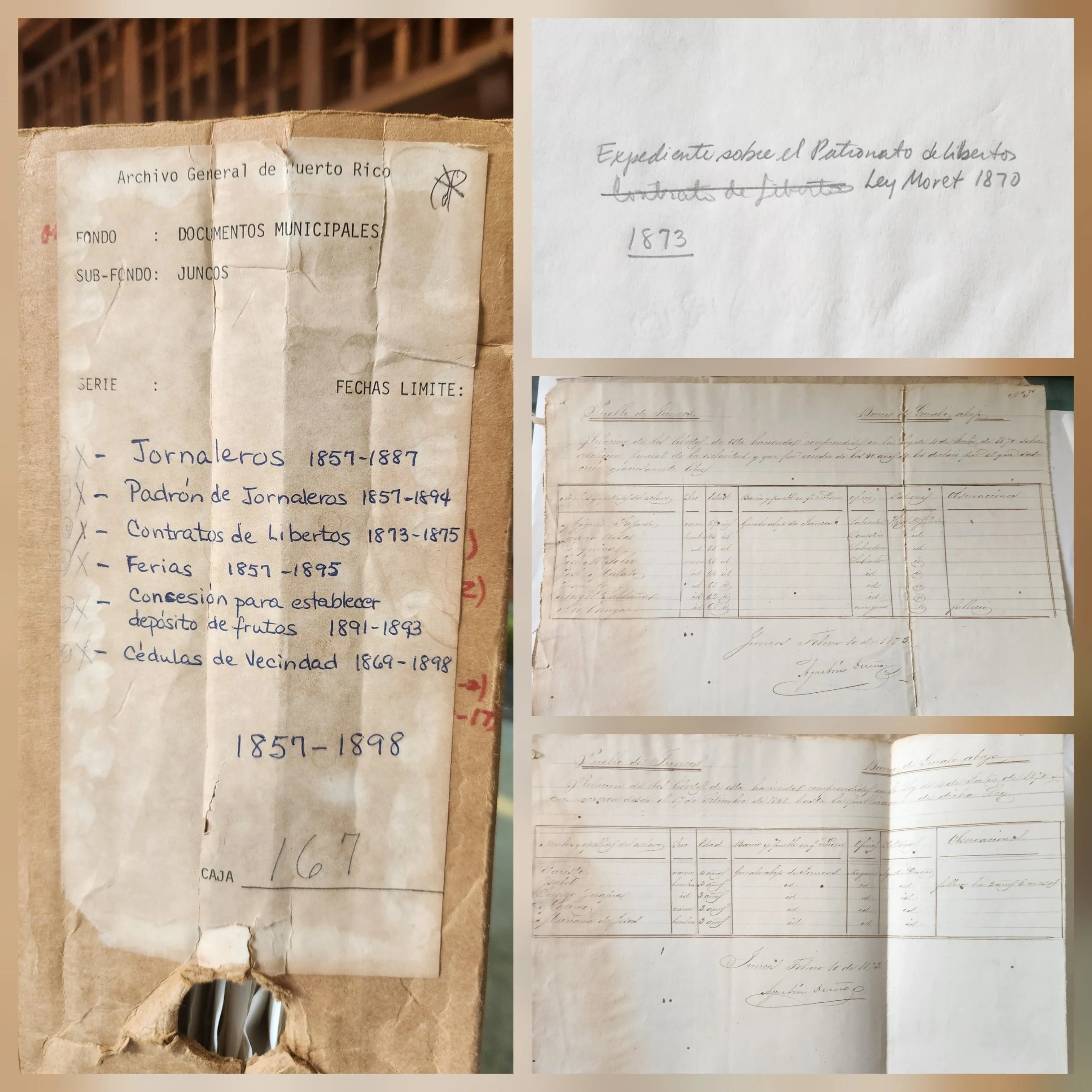
Caja de Ancestrales. A box of nineteenth century documents kept in the Archivo General de Puerto Rico including lists of names of libertos (freed people), adults and children liberated from enslavement in the municipio (municipality) of Juncos after the Ley Moret (Moret Law) was passed July 4, 1870 by Spain in Cuba and Puerto Rico. The law, named after Segismundo Moret who was Spain's Minister of Overseas Territories at the time, implemented the abolition of slavery incrementally in Spain's Caribbean colonies.
TEA called to mind my pre-Katrina childhood camp adventures where I would spend a few weeks of my summer, bopping around to different parts of New Orleans and meeting different versions of myself through new experiences and new people. Many of the summer camps we attended were primarily populated by other Black children. Blissfully, the TEA x PROPA Field School was replete with many other Afro-Caribbean adults. From June 20-July 3, 2026, we engaged in workshops to learn the digital humanities skills needed to collaboratively create the website for PROPA’s Lugares Históricos project. The website will host the proper audio, transcripts, GIS mapping, and photographs to make informative, self-guided walking tours possible. Most meaningful to me, among the participants and staff-organizers, we effortlessly built an intergenerational network of people dedicated to Afro-Puerto Rican history and Bomba culture both inside and outside of the academy. During the two weeks of the Field School, we co-worked on small group projects that contributed to the larger vision, a space that honored the skills/gifts/experiences/knowledges each of us brought with us to the program. We even had cute, and on theme, group names, just like summer camp: Bailadores, Cuá, Barril, Maraca, and Cantadores! Taller Entre Aguas reminded me how sacred learning in community is to me. It also reminded me of the sanctity and rarity of Black-centered learning spaces.
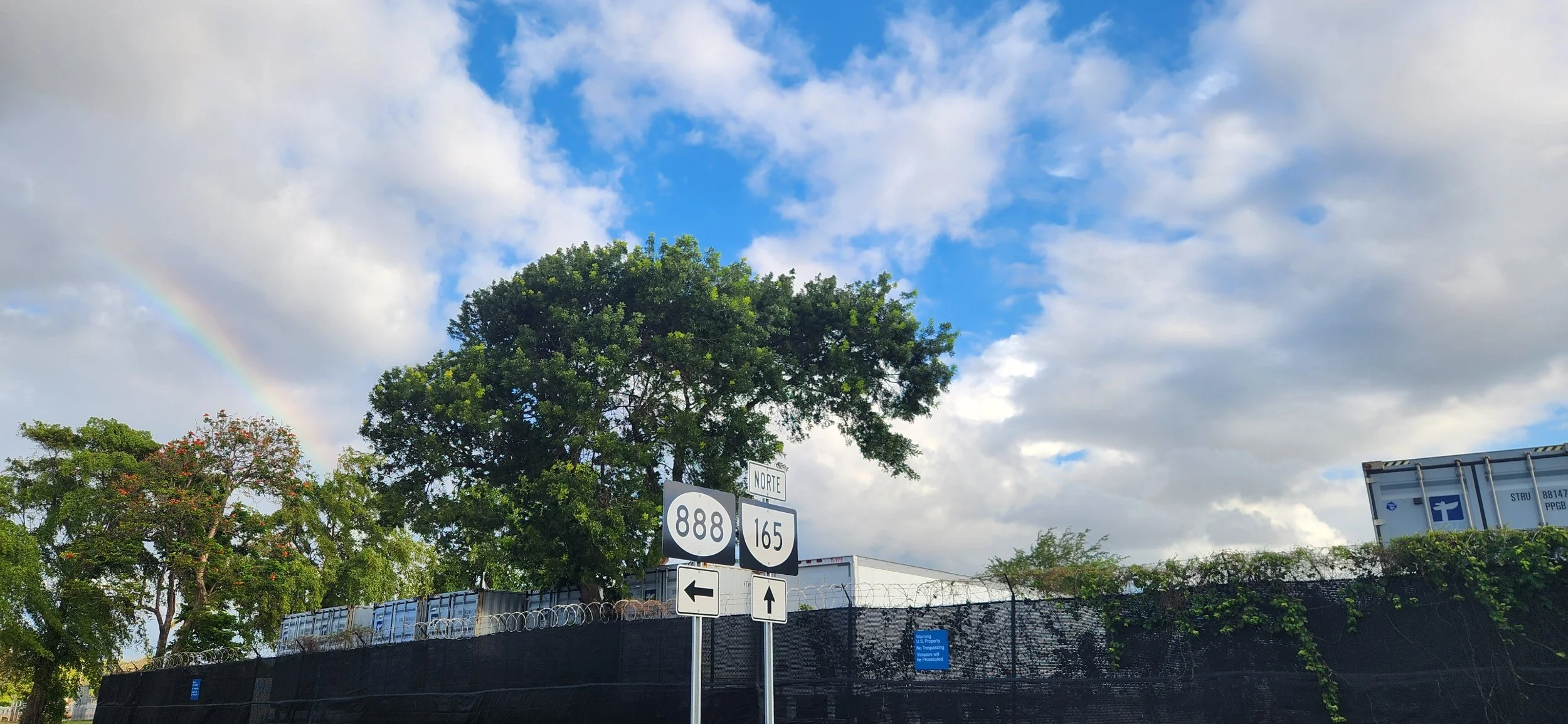
Pride in Puerto Rico. A casual drive by of flamboyanes (flamboyant, royal poinciana trees), rainbows, and angel numbers at the end of June 2026.
When we weren’t involved in digital humanities workshops, our fleet of Broncos caravanned across the island—a rented herd of sport utility vehicles migrating to-and-fro, coast to coast making pilgrimages to lugares históricos (historic places) marked with bronze and black PROPA plaques. We met the relatives of Bomba legends. We walked in silent reflection of what our African ancestors survived when forced to cross seas, cramped together in the bowels of dank, lightless ships. We sang and danced, filled with aliveness for them too. We held a belén para les ancestres (ceremony for the ancestors) beneath an ancient ceiba (silk cotton) tree in front of the ruins of a plantation in Toa Baja. We searched the archives and read the names of formerly enslaved people aloud in the Archivo General de Puerto Rico in reverence of their humanity under the direction of my homeboy Dr. Daniel Morales-Armstrong. We learned from the iconic licensed librarian Gladys E. Tormes González for whom the Archivo Histórico de Ponce is named. We snapped photographs in the field. We transcribed and translated interviews together. We learned and practiced using three different digital mapping softwares under the tutelage of Dr. Kiana Gonzalez Cedeño and Anais Couvertier Garay. And, lovingly reminded by Ivelisse “La Bombera de Corazon” Diaz daily, we always always returned to la ética (the ethic) of accountability that grounds our work.
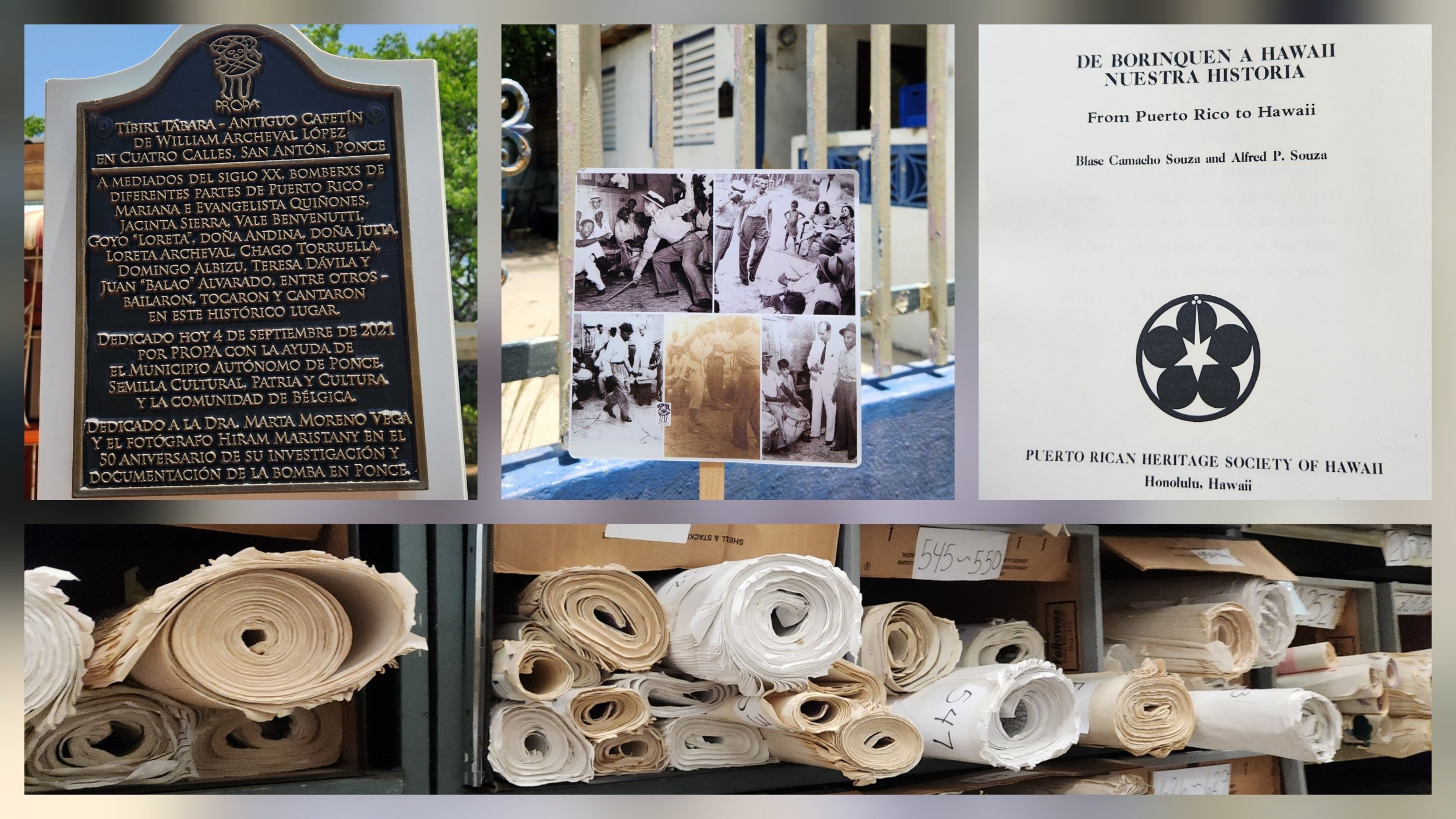
Photos, Papeles, y Placas: A Collage of Sights and Signs Captured at Field Site Visits from San Antón to Cataño.
If you would have asked me back in December 2025 when I submitted my application form from Kathmandu, Nepal what was my primary motivation for participating in a field school two years after I completed my doctoral degree, I would have told you I wanted to reconnect with the place and people that changed my life as a researcher and as a learning spiritual being. Thanks to Taller Entre Aguas organizing team, I was able to arrive early before the program began and visit with the community members without whom my dissertation research would not have been possible. By participating in the TEA x PROPA Field School, I hoped to reconnect with the parts of academic life that I adore as an anthropologist: shifting seamlessly between the mindset of learner/student and guide/teacher; engaging in peer and intergenerational mentorship, and sharing career advice; dancing at the beach; participating in workshops to hone my skills; listening to all the genres of Puerto Rican music; devouring delicious food; visiting the archive; imparting wisdom and laughing at nerdy things; circumnavigating the island for fieldwork; and documenting and preserving the histories of peoples of African descent in the Caribbean. Mi gente, te lo juro (my people, I swear), the TEA X PROPA Field School delivered all of that, and more!
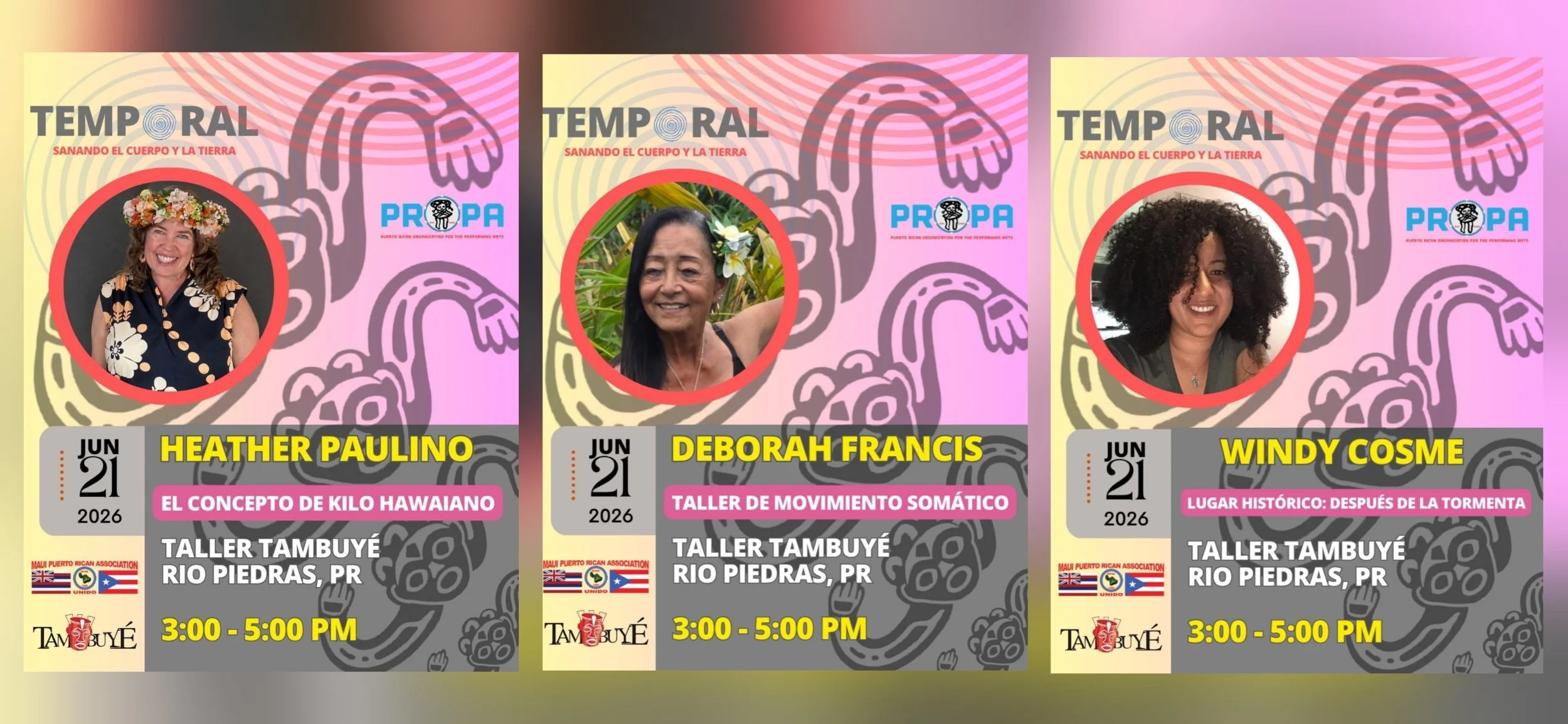
Huracán: Espiral Temporal. “PROPA has been telling the story of the Puerto Rican migration to Hawai'i for more than two decades. We are thrilled to continue this work by hosting Deborah Francis, president of the Maui Puerto Rican Association - the 4th generation of her family to live in diaspora in Hawai'i. Join us for TEMPORAL to learn how the hula of Hawaii's archipelago may be used to help you relieve tension, stress and trauma related to living through the impacts of climate change and other natural disasters. Hand movements are an essential part of hula - the storytelling dance of the Hawaiian islands. In the 125 years since Deborah Francis’ Medina, Santos and Mercado ancestors left Peñuelas and Adjuntas, they have kept various traditions of their Boricua ancestors alive by continuing to make pasteles, share family stories of life in Puerto Rico and enjoy traditional mountain music while also living their lives in the spirit of Aloha in Hawai’i. Join us for a TEMP🌀RAL workshop to learn the importance of Ulana in hula and other ancestral movements that greet the elements and honor nature. Windy Cosme is a cultural historian, museum professional and board member of Fundación Ismael Rivera. She will kick-off this TEMP🌀RAL session by connecting us to the restoration work undertaken at the Casa Museo (where Doña Margarita “Margó” Rivera lived) on Callejón Concordia in the historic community of Machuchal in San Mateo de Cangrejos in the days, weeks, months and years after the destruction caused by Hurricane María. Dr. Cosme is a professor at the University of Puerto Rico, Rio Piedras; co-director of Espacios de Memoria en Puerto Rico and an inaugural cohort member of the 2026 TEAxPROPA Field School.” - Melanie Maldonado, founder of PROPA
On the opening day of the Field School, I went to a PROPA taller (workshop) led by two descendants of Puerto Ricans who undoubtedly passed through the Port of New Orleans en route to Hawaiʻi after Hurricane San Ciriaco in 1899—a history central to chapter one of my dissertation. The speakers, Deborah Francis (4th generation in Maui whose ancestors were from Peñuelas and Adjuntas) and Heather Kahealani Paulino (5th generation in Oʻahu whose ancestors were from Yauco), affirmed that despite time and distance, diasporic lineages always find their way back home in some way, shape, or form. Their presentation, and somatic movement and hula demonstration, was followed by a brief charla (talk) given by Dr. Windy Cosme Rosario—one of my soon-to-be group project collaborators (Bailadores pa’ siempre!)—about the restoration and historic preservation work done in Santurce in the wake of Hurricane María in 2017. I left these workshops knowing I had made the right decision to accept the invitation to join the TEA x PROPA community.
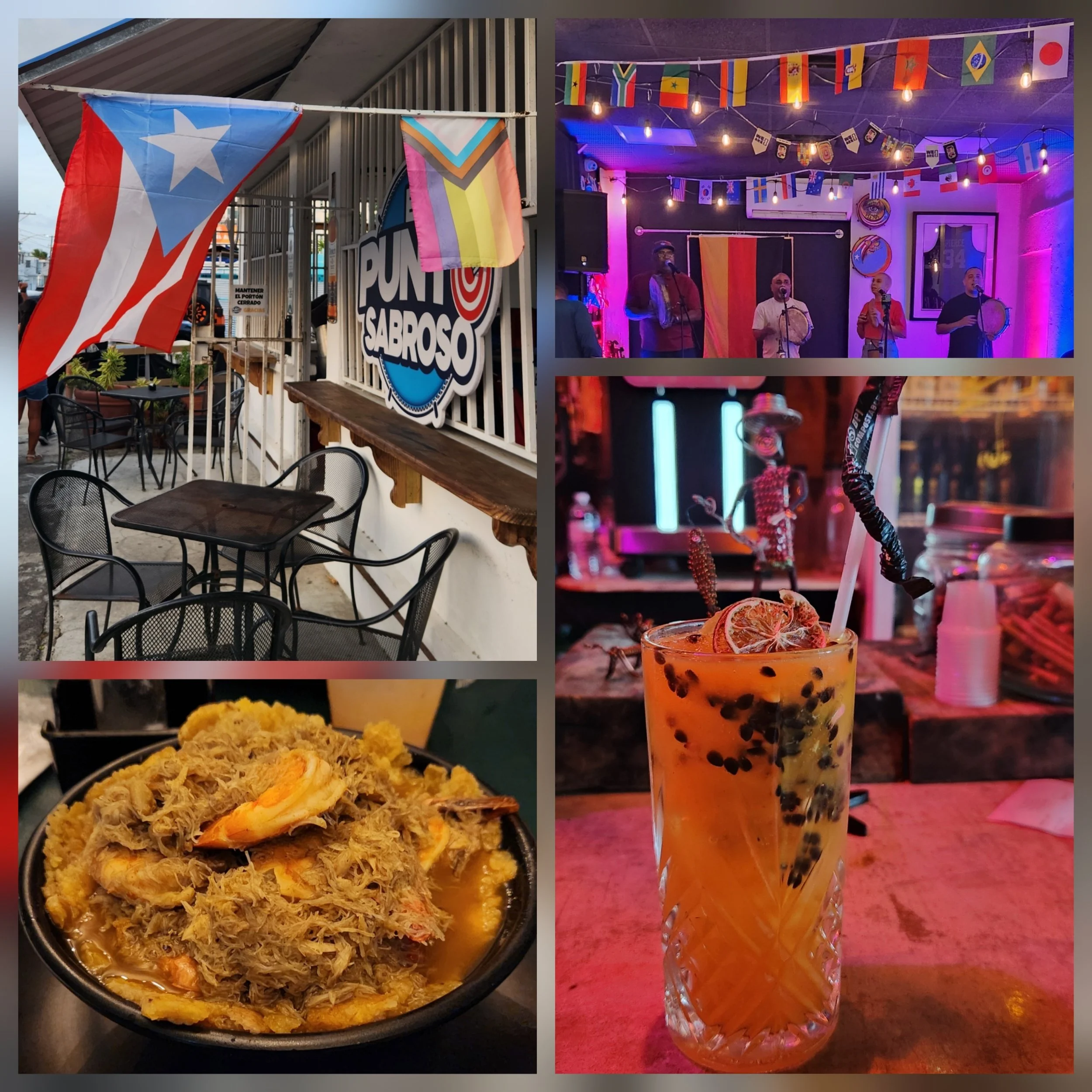
Pique, Plena y Parcha en el Punto Sabroso: A Collage of Things I Consumed con Gusto. That bowl of mofongo (mashed plantains) with crab meat and shrimp was bussin’, especially with the homemade hot sauce, and anyone that knows me know how much I love passion fruit!
For the love of field schools, after three months of reflection and holding my summer memories close, I am here finishing up writing this essay on the eve the Fall Equinox. In 2025, while working as a traveling professor for a year and guiding 39 young people studying at different universities across the U.S. through developing independent research projects, I kept coming to the conclusion that as scholars and and scholars-in-training we are often expected to just know what to do when it comes to ethically developing research and writing it up well. For some of my students, my research methods course was their first time learning about diverse methodologies or even writing a research paper. For the ones that had done so before, many recounted how they had been turned loose into the world or on a data set in a lab and expected to figure it out on their own. Perhaps the academy instills the idea that we must learn to do the whole research thing in isolation, mostly through osmosis, trial and error, or reading the work of our predecessors. However, in my experience—which was filled with incredible professors and mentors of color who took the time to share stories with me from their time in the field and guide me toward methodological texts that aligned with my values and the ethical praxis they saw me constructing for myself—sometimes you just need someone to talk you through it. A field school is a place where that magic can happen organically, especially when organized with care and purpose at the forefront—even amidst water shortages!
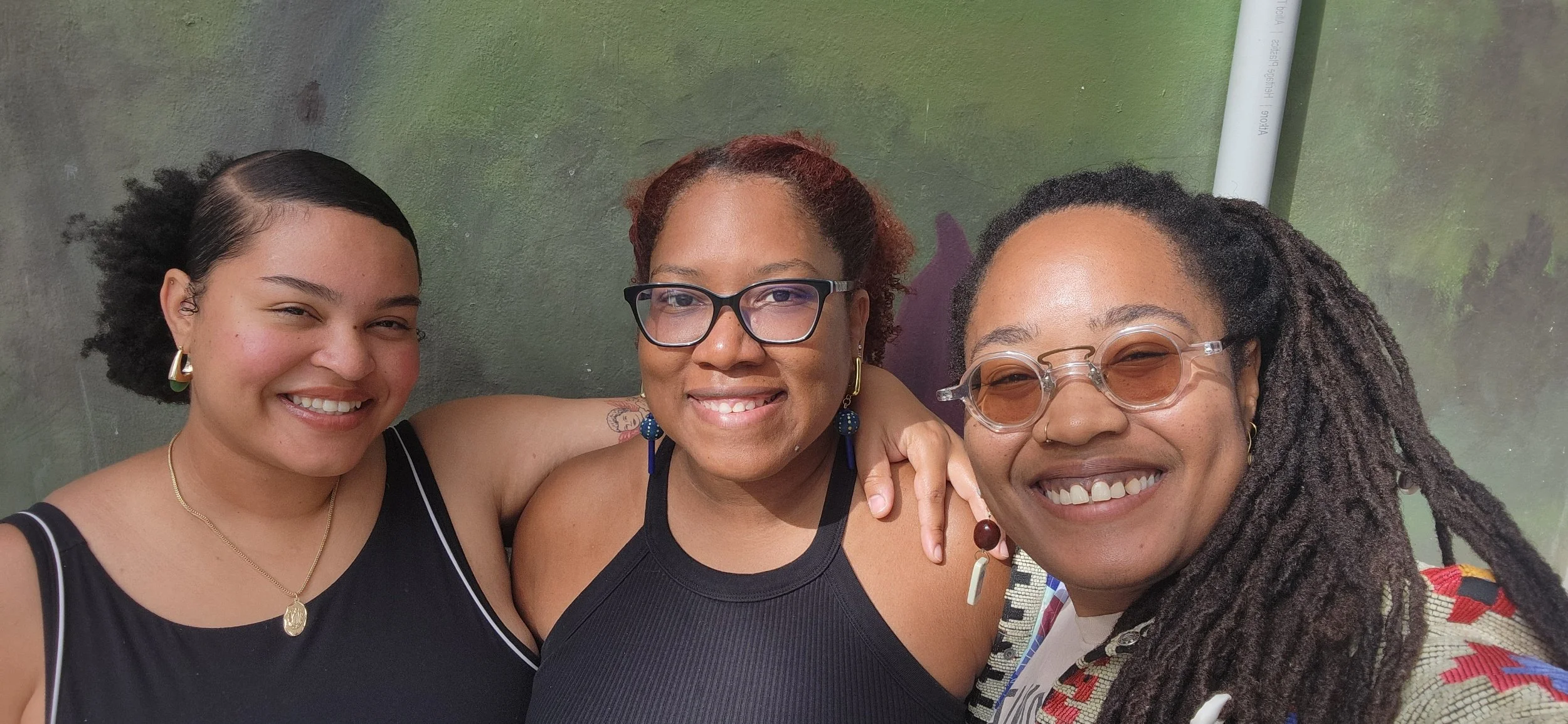
Mis Roomies y Yo, or The Cohabitation of a Historian, a Librarian, and an Anthropologist. Every night, Yesika, Jeanmary, and I (pictured left to right) had cozy tea parties in our living room where we talked about life while the extroverts were blasting music and enjoying the pool outside, so kudos to whoever decided the Field School roommate placements; you understood the assignment!
During the summer of 2026, the Taller Entre Aguas team created a safe space to meet new people, learn new research methods, refine existing skills, and share knowledge with each other across generations, disciplines, and gender expression. My experience with Taller Entre Aguas was one of the most nurturing, encouraging, and culturally rich academic environments I have ever been in. It was also my first time, outside of a gathering curated by my grad school advisor, Dr. Deborah A. Thomas, where I was surrounded primarily by brilliant Afro-Caribbean scholars. I cannot overemphasize the beautiful relief of feeling comfortable and welcome to speak in more than one language/dialect/register simultaneously to communicate with others while my expressing ideas. At some point during the Field School, I was by the pool where people were talking to each other in English (African-American Vernacular and modern standard), Spanish (Boricua and Castellano), and Spanglish while I was having a side conversation with Jeanmary (one of my roommates and a Bailadores research group member) in Portuguese/Portañol. And, to top it all off, no one was ever policed for their volume level or gesticular dynamism while expressing themselves when speaking. The TEA x PROPA Field School invited me to be my full self, loudly, joyfully, and multilingually. For that alone, I am eternally grateful.
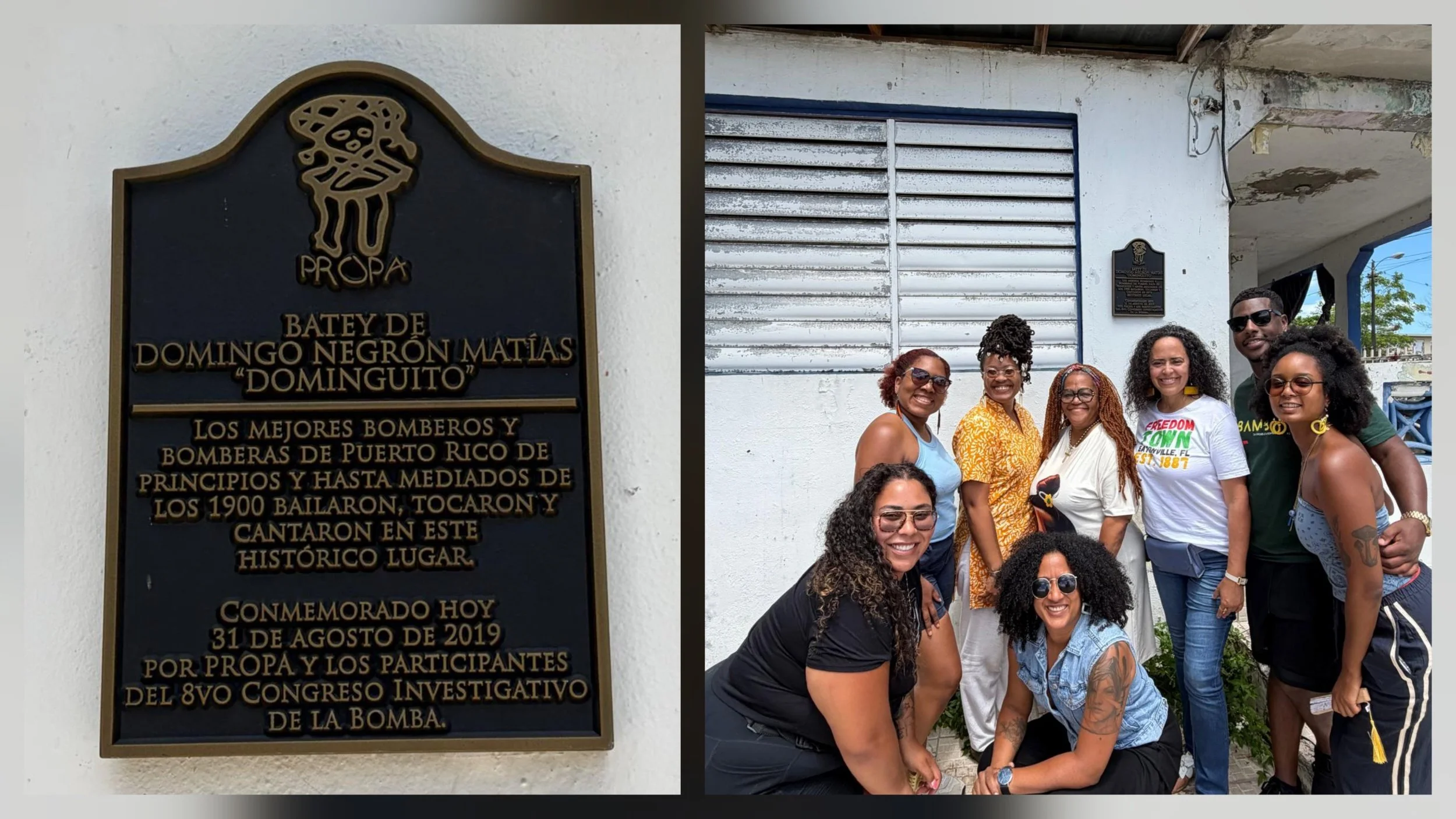
Baddie Bailadores en el Batey. The photos in this collage were taken by Dr. Kiana González Cedeño during our site visit to Domingo Negrón’s home in Cataño where we had the opportunity to speak with one of his relatives and view the PROPA plaque marking his home as a historic place for Bomba. The PROPA Plaque reads: “Batey of Domingo Negrón Matías ‘Dominguito’: The best Bomba practicioners in Puerto Rico from the early to mid-1900s danced, played, and sang in this historic place. Commemorated on August 31, 2019 by PROPA and the participants of the 8th Bomba Investigative Congress.” Pictured (from left to right, front to back): Sarah, Windy, Jeanmary, me, Domingo Negrón’s great-granddaughter, Melanie, Nico, and Melanie.
For me, the maraca workshop series became one of the stand out experiences of the TEA x PROPA Field School when elements of my research group’s project were shared with everyone else. We—the Bailadores—had been charged with transcribing and translating an interview about a major figure in Bomba history, Domingo Negrón Matías. As Melanie Maldonado affirms in that recording, Domingo Negrón was one of Puerto Rico’s most beloved Bomba practitioners of the early twentieth century who left his seaside community of Cataño, Puerto Rico and his job there as a dock worker in 1917 to work the docks in Brooklyn, New York. During our field site visit to Cataño, the Bailadores had the privilege of going to Domingo Negrón’s home where he and his family hosted epic Bombazos in the batey they created in their side yard patio. We even got the chance to meet some of Domingo Negrón’s relatives, including his grandson who was born in the 1940s and still lives nearby. As his grandson shared memories from his childhood, we ate limbels (huck-a-bucks/frozen cups/icees) together and listened in awe as he took us back in time with his words. Following Domingo Negrón’s departure, his community mourned the temporary relocation of this illustrious convener and dancer by immortalizing his story in a song that is still sung by Bomberos today, over one hundred years later!
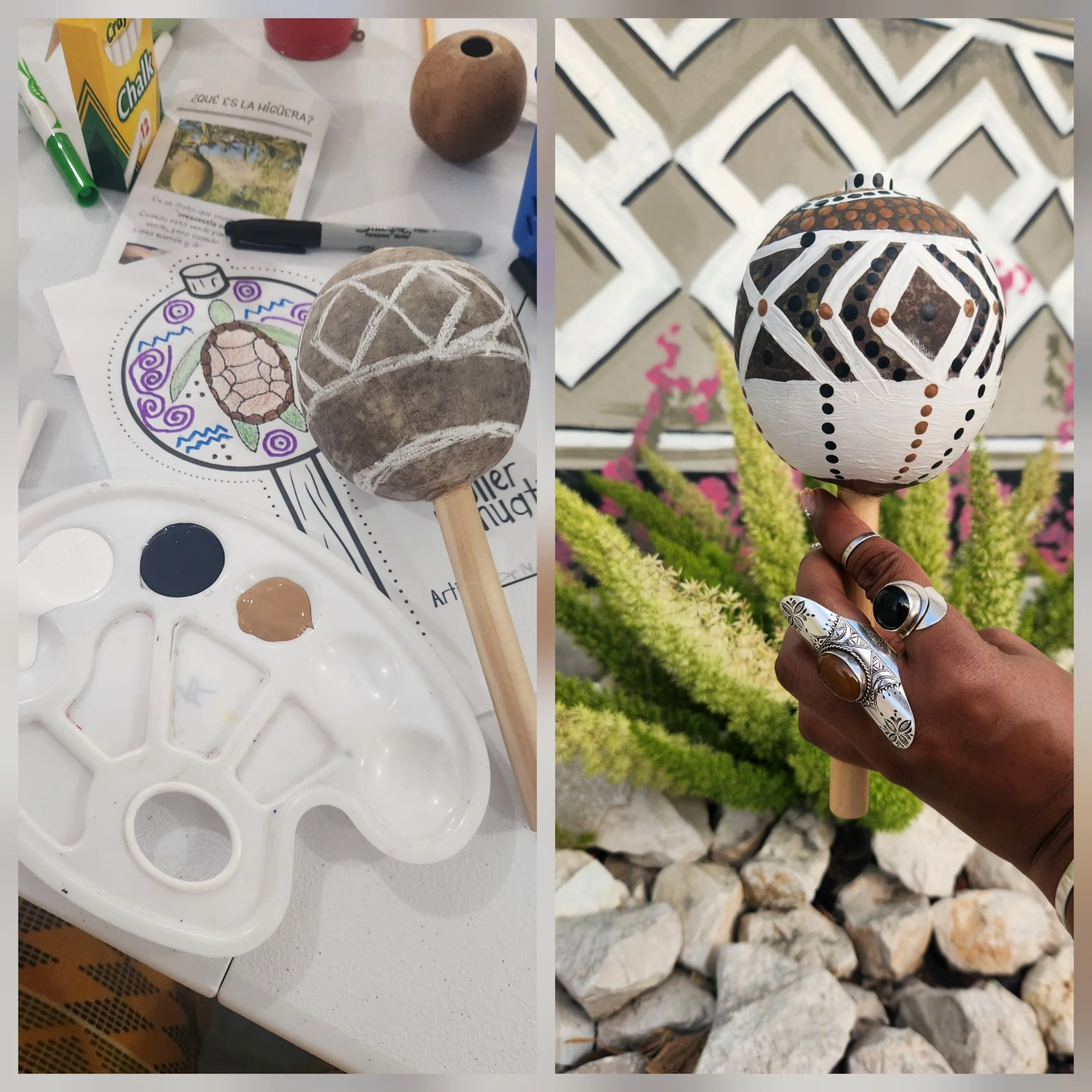
From Start to Finish: My Ancestrally-Inspired Maraca. The blank page inspired one design, the higüero asked for another when I picked up the chalk and paint, so I just followed spirit and allowed my creativity to flow freehand. I designed and painted this maraca under the guidance of Barbara and Luis from Taller Kenuati who lead workshops that teach folks how to process the higüero fruit and fill it with canna seeds to make beautiful sounding maracas the traditional way. Follow them on Instagram and support their incredible work, which also includes wearable art!
After we learned to handmake and decorate maracas with Taller Kenuati, one of the Field School’s esteemed participants, Ivelisse “Bombera de Corazón” Diaz, led a another workshop where she taught us how to play them. It was a spiritual experience—an exercise in community building where we learned to trust ourselves and each other with our powerful voices. To my delight, Ivelisse did this by teaching everyone the words to the ode to Domingo Negrón that the Bailadores had learned about through our interview transcription, translation, and fieldwork: “Domingo Negrón se embarcó pa’ Nueva Yol y dejó a sus hijos, a sus hijos de corazón” (Domingo Negrón boarded a ship to New York, and left his children, the children of his heart). We all moved around the room in a spiraling circle, singing and playing our maracas together as one, embracing the healing technology of call-and-response to find our individual voices and collective resonance as we honored Domingo Negrón, one of Bomba’s beloved ancestral spirits.
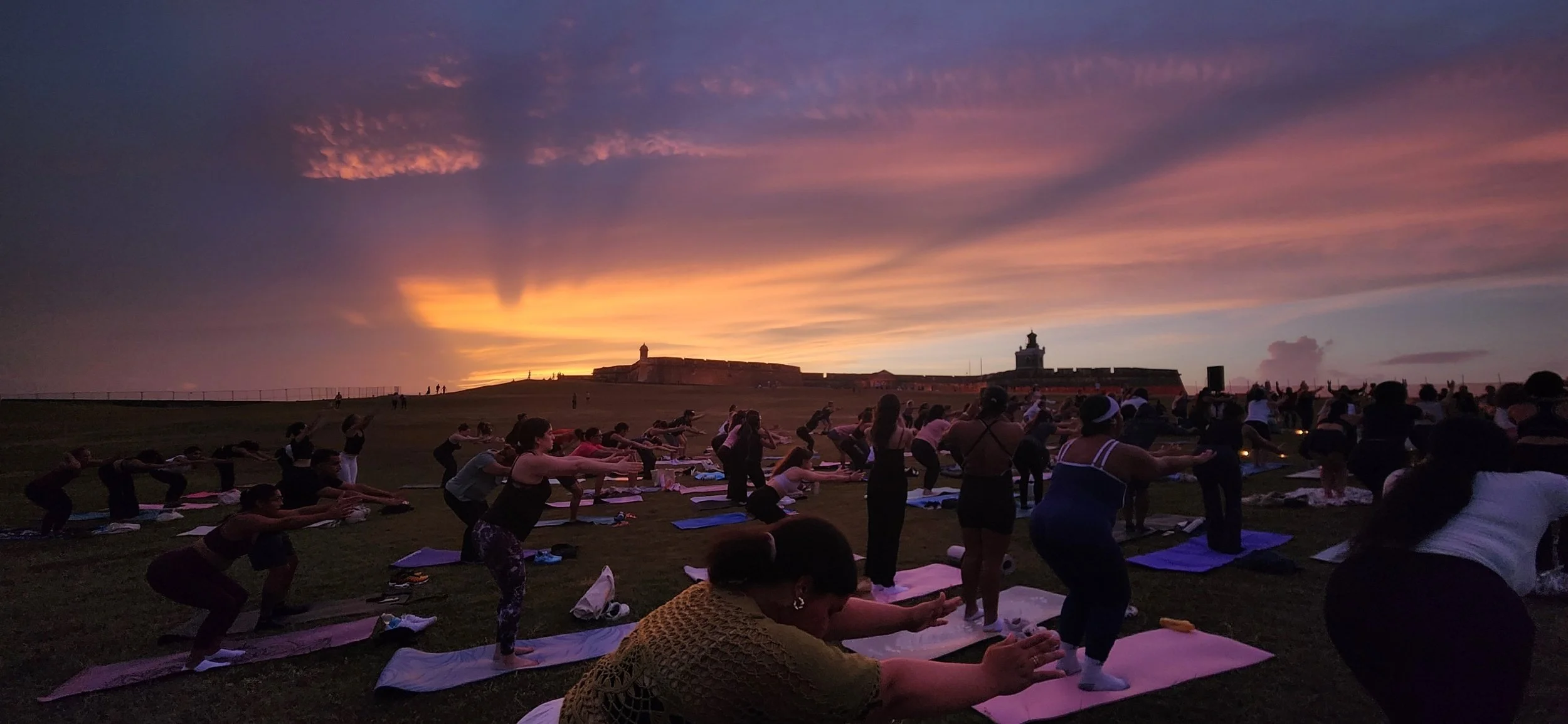
Salve La Luna Llena. Cancer sunset views before the rise of the full moon in Capricorn during yoga at the Castillo San Felipe del Morro, a large fortress and citadel in Viejo San Juan. Puerto Rico was the first place that my photographer father ever visited outside of the United States. Before he died, whenever I went to do fieldwork in the archipelago, Morris Jones, Jr. always asked me to take another photograph of El Morro for him to add to his collection. I know my Cancer dad would have the loved colors and the people in this one, so I paused my flow to capture the moment just for him.
This summer at the TEA x PROPA Field School, I felt myself moving toward a state of freedom, but as honorable ancestor Fannie Lou Hamer said in her speech delivered at the founding meeting of the National Women’s Political Caucus in Washington, D.C. on July 10, 1971, "Nobody's free until everybody's free." As the first full moon of the summer rose on the horizon, I was doing yoga in the grass in front of El Morro during a spectacular sunset with four other TEA participants. All of the yogis present dedicated our practice to the earthquake survivors in Venezuela, to the people in Borikén persisting through the excruciating heat without running water for weeks, to the people in Gaza facing a televised genocide, to anyone in this world in need of uplifting energy.
On this “twenty-first night of September”—the sacred sound of Chicago’s own Earth, Wind & Fire ushering in the Fall Equinox—I am reminded that paradise is a place where revolution is possible—a space to dream a future filled with freedoms most of us cannot yet feel in our bodies. History reminds us that revolution begins in the burnt-out and exhausted bodies enduring on the margins. Fannie Lou Hamer’s declaration at a Civil Rights rally in Harlem, New York on December 20, 1964 continues to resonate: “I've been tired so long, now I am sick and tired of being sick and tired, and we want a change.” It is almost always the dismissed and the downtrodden, the oppressed and the underestimated, the Black women and the queer people leading the fight for our future because we live knowing that envisioning a future where we exist beyond mere survival is a matter of life or death. I am grateful to know that in this struggle for change, freedom, and love I am not alone—and I never was.
With regular boil water advisories in New Orleans and water shortages in Puerto Rico—paired with recurrent power outages and hurricane risk, as well as exploitative tourism and ongoing gentrification in the circumCaribbean—these two places have struggles in common that also serve as a foundation for solidarity. Summer 2026 reminded me that I belong to a communiTEA that is both living and ancestral, scholarly and artistic. Sometimes, the act of pursuing “those degrees” and an academic career eviscerates the love of learning that brought many scholars to the Ivory Tower in the first place. Twelve days in the TEA x PROPA Field School revived and nourished me in ways the predominantly white institutions where I completed my schooling “could possibly never,” as we used to say in New Orleans in the 90s. We all got a role in the revolution; it’s up to each one of us to learn what it is and commit to serving the collective. This summer reminded me that every day I am working to become a warrior in my own right, even if the sharpest weapon in my arsenal is my pen.
Pa’lante,
Dr. Jones
P.S. I hope y’all appreciated all of the Chicago musical references for my ChiRicans!
P.P.S. Applications for the 2027 TEA x PROPA Field School are now open and close on December 1, 2026. Shoot your shot if this essay resonated with you and you want to be part of the second cohort!
https://www.tallerentreaguas.org/field-school
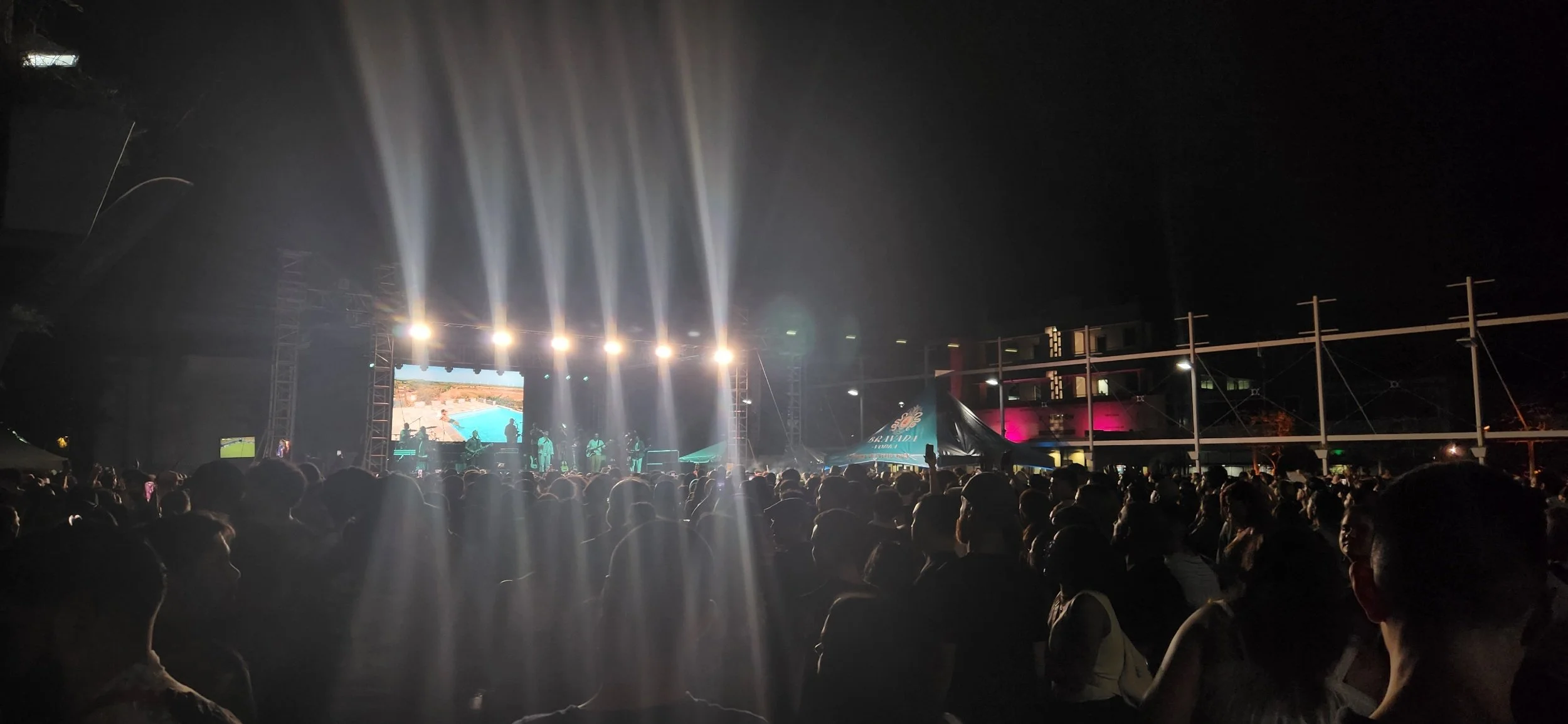
Prophetic Culture. Cultura Profética, a Puerto Rican reggae band, put on a free show in Rio Piedras in honor of the release of their new album En Bucle (2026).
Dive Deeper: A TEA x PROPA Field School Bibliography
Compiling this [very much not comprehensive] list of works centering Afro-Puerto Rican and Black folks—created, performed, and co-authored by my fellow Field School participants—is part of why it took me so long to publish this blog post. It was such a blessing for me to be among so much genius this summer and I wanted to find a way to keep us together representationally after we all went home. Check out their multimodal scholarship and let them learn you something new through words, theatre performances, exhibitions, images, songs, and dances!
Abadía-Rexach, Bárbara I. 2012. Musicalizando la raza: la racialización en Puerto Rico a través de la música. San Juan: Ediciones Puerto.
Abadía-Rexach, Bárbara I. 2026. “Afro–Puerto Rican Studies and Transgressing Epistemological Narratives: Facing and Surviving Anti-Black Racism in Puerto Rico,” pp. 136–152. In Interrogating the Future of Puerto Rican Studies, edited by Aurora Santiago Ortiz and Jorell A. Meléndez-Badillo. Durham: Duke University Press.
Abadía-Rexach, Bárbara I. 2026. ¡Saludando al tambor! El nuevo movimiento de la bomba puertorriqueña. Toa Baja: Editora Emergente.
Bruno, Sarah. 2022. “‘Yo La Bomba No La Bailé, La Bomba Yo La Vivé’ (I Didn’t Just Dance Bomba, I Lived It): The Pedagogy of Daily Puerto Rican Life, Black Feminist Praxis, and the Batey.” Transforming Anthropology: A Publication of the Association of Black Anthropologists, 30(2): 93–106.
Bruno, Sarah and Jessica Marie Johnson. 2022 & 2023. "‘Que Recogan Este Memoria’: Black Puerto Rican Data.” New Literary History, 53(4) & 54(1): 583-611.
Bruno, Sarah and Elyse Veloria. 2025. “Bad Bunny above Ground: The Aesthetics of Nostalgia and (Black) Aural Citation.” In The Bad Bunny Enigma: Culture, Resistance and Uncertainty, edited by Sheilla R. Madera, Nelson Varas-Díaz, and Daniel Nevárez Araújo. Dublin: Lexington Books.
Bruno, Sarah, Daniel Morales-Armstrong, Essah Diaz, Jessica Marie Johnson, eds. 2025. Water Proof: olas de memoria. Journal of the Center for Puerto Rican Studies, 37(1).
Cosme Rosario, Windy M. 2020. “El museo / los museos: de la oda a la colonización y el imperialismo a la interdisciplinariedad y la apertura social.” Polimorfo, 6: 41-50.
Cosme Rosario, Windy M. 2022. “Memorias Fotográficas de Tras Talleres: Un proyecto de MAC en el Barrio.” San Juan: Museo de Arte Contemporáneo de Puerto Rico and Museo de la Memoria de Tras Talleres.
Cosme Rosario, Windy, Karla Aponte Arce, Sara Marina Dorna Pesquera, Donald C. Escudero Rivera, Hester Street, Omayra Rivera Crespo, Olga Villa and Dimaris Jiménez. 2022. “Memorias Fotográficas de Tras Talleres.” Tras Talleres, Santurce.
Dávila Reyes, Juan R., Jeanmary Lugo-González, Juan Soto Rosa, and Aileen Díaz Rivera. 2018. “La trayectoria mediática de María: un estudiocomparativo de noticias.” Revista Intersecciones.
Díaz, Essah Cozett. 2025. “Ancient Blessings: Maternal Reclamations in Lorna Goodison’s I Am Becoming My Mother.” Small Axe.
Díaz, Essah Cozett. 2023. Poems: “Mar Libertad”, “Am I the Bridge?” and “Honey on My Altar.” La Libreta. RoblesWrites Productions, Inc.
Díaz, Essah Cozett and Yomaira C. Figueroa-Vásquez. 2023. “Decolonial Love as a Praxis: Essah Cozett Diaz in Conversation with Yomaira C. Figueroa-Vásquez.” Isele Magazine, January 16.
Díaz, Ivelisse ‘Bombera de Corazón,’ Pedro L. Amaro ‘Pepa,’ Christhian A. Galarza Boyrié, Ángela Vázquez, Bárbara Pérez and Sandra Pagán Gallardo. 2026. “Pa’ Guayama.”
Díaz, Ivelisse ‘Bombera de Corazón.’ La Escuelita Bombera de Corazón.
Figueroa-Vásquez, Yomaira, Windy M. Cosme Rosario, and Dalina A. Perdomo Álvarez,
with support from Diaspora Solidarity Lab fellows Melanie Rodríguez Vázquez, Ariana Costales Del Toro, Yafrainy Familia, Nicole Hernández, Stephany Bravo, Imaida M. Durán Mariñez, Alana Cordero Montesinos, Meleny González, Olivia M. Ramírez, Jaden Morales, and Yuleysy Ortiz. 2026. Diasporic Collage: Puerto Rico and the Survival of a People. Chicago: National Museum of Puerto Rican Arts & Culture.
Hall, Kellsey. 2026. PROPA. Pixelset, June 30.
González-Cedeño, Kiana, and Ariana Costales del Toro. 2024. “Ballrooms and the Sacred Runway: Intimate and Public Lamentations in Cuir Communities of Puerto Rico.” Centro Journal, 36(2): 279-303. New York: Hunter College, Center for Puerto Rican Studies.
González-Cedeño, Kiana, Lauren Prince, Anais Couvertier Garay, and Teona Williams. 2025. “Forging Afro-Diasporic Bonds: Black Feminist Worldmaking After the Storm in the Greater Caribbean.” Centro Journal, 37(1): 135-159. New York: Hunter College, Center for Puerto Rican Studies.
Jones, Gillian Maris. 2018. “Black Lives Abroad: Encounters of Diasporic Solidarity in Brazil.” Biography: An Interdisciplinary Quarterly, 41(4): 831-855. Special Issue: M4BL and the Critical Movement for Black Lives. Brittney Cooper and Treva Lindsey, eds.
Jousse, Florient, Big Chief Juan Pardo, Frédéric Madia, Zélito Deliron, Marien Torres Lopez, and Ivelisse Diaz. 2026. Flamboyants!: A Theatrical Journey Through Culture.
Logan, Tyler. 2025. “In a Tougher 2025, Black Communities Are Fighting for Mental Health Access.” Ethel and James Flinn Foundation.
Lugo González, Jeanmary. 2025. “Humanidades digitales y las colecciones especiales de la Biblioteca y Hemeroteca Puertorriqueña: el caso de la Colección Juan Mari Brás.” Archipelagos Journal, 8: 1-16.
Maldonado, Melanie. 2024. “Bomba: A Long Invisible Practice of Black Placemaking in Puerto Rico.” In Made in Puerto Rico edited by Hugo R. Viera-Vargas, Noraliz Ruiz-Caraballo, Errol L. Montes-Pizarro, Jaime O. Bofill-Calero, and Noel Allende-Goitía. New York: Routledge, pp. 114-126.
Maldonado, Melanie. 2019. “Suelta el Moño: the Herstories of Change Agents and Perpetuators of Bomba Culture”. Centro Journal, 31: 86-109. New York: The City University of New York.
Maldonado, Melanie. 2008. “Bomba Trigueña: Diluted Culture and (loss of) Female Agency in AfroPuerto Rican Music and Dance Performance.” In Caribbean Without Borders: Literature, Language and Culture edited by Dorsia Smith, Raquel Puig Campos, and Ileana Cortés Santiago. Newcastle: Cambridge Scholars Publishing, pp. 95-117.
Marcano, Chayanne. 2021. “Ramón Bulerín: The Presence of Past.” In Art Writing Incubator 2021: Criticism Among Crisis (Burnaway), 27–31.
Marcano, Chayanne. 2021. “Fever!” Visual Aids, September.
Marcano, Chayanne and Vanessa K. Valdés, eds. 2026. Black Puerto Rican Studies. Albany: State University of New York Press.
Méndez Irizarry, Alejandra Sofía, Jeanmary Lugo González, Isamar Abreu Gómez. 2020. “Antirracismo en el sector bibliotecario: una reflexión entre pares.” Infotecarios, June 17.
Mendoza, Dozandri. 2024. “That /s/ tiene tumbao: Chonga-fied sibilants and the disidentificatory sociophonetics of Miami Latinx Drag,” Gender and Language, 18(3): 306-327.
Mendoza, Dozandri and Daniel J. Vázquez Sanabria 2024.” Cuir Dialogic Intimacies: Mapping Lo Cuir in Bad Bunny’s Performance Repertoire.” In The Bad Bunny Enigma: Culture, Resistance and Uncertainty, edited by Sheilla R. Madera, Nelson Varas-Díaz, and Daniel Nevárez Araújo. Dublin: Lexington Books.
McMillan Mohammed, Tamara. 2026. “Coming Home to a Place I’d Only Barely Known: What Puerto Rico Taught Me About Memory, Community, and Home.” Bush Tea Diaries, Substack, July 08.
Morales-Armstrong, Daniel. 2023. “Overseen and Overlooked: Spanish and British Silencing of Labor Resistance in Post-Emancipation Puerto Rico.” Slavery & Abolition, 44(2): 394-410.
Morales-Armstrong, Daniel. 2025. “Cimarrones, Rebels, and Plaintiffs: Strategies Enslaved Africans and their Descendants Used to Resist Slavery in Puerto Rico (Sixteenth to Nineteenth Centuries).” Centro Journal, 37(1): 111-133.
Pacheco Muñoz, Joniel R. 2023. “Tipas Raras Cargando un Movimiento: Reggaetón, Decoloniality, and Knowledge through Subversion.” Caribbean Studies, 51(2): 3–31.
Quiñones Rivera, Ailish F. 2025. “Silvia del Villard y la polémica del folklore.” Rutgers Puerto Rico Archival Collaboration (PRAC).
Rodríguez Vázquez, Melanie. 2025. “The Survival of Our People Through the Reactivation of Memory.” Museum Catalog for the Diaspora Solidarities sister exhibitions, Coastal Relations: Enacting Diaspora and Diasporic Collage: Puerto Rico and the Survival of a People. CENTRO Press, Puerto Rican Arts Collection.
Rodríguez Vázquez, Melanie. 2024. “(Paréntesis): A Brief Reflection of (Un)Belonging and Collective Memory in Afro-Puerto Rican Art.” Caliban’s Readings, Caribbean Philosophical Association, Feb 27.
Rodríguez Vázquez, Melanie N. 2022. “Rethinking Black and Brown Space: Digital Humanities Exploration of Caribbean and African Diasporic Experience.” Making Sense of Digital Humanities: Transformations and Interventions in Technocultures, edited by Julian Chambliss and Ellen Moll.
Rosario Romero, Ahisamar Antonia. Portafolio de la Artista Multidisciplinaria.
Usera, Juan. La Tribu del Juey Sambuco: Caribbean Music and Dance Ensemble and Arts in Education Company.
Williams, Teona, Kiana González Cedeño, Anais Couvertier Garay, and Lauren Prince (The After the Storm Collective). 2024. Disaster Across Diaspora: Resistance Stories in the Greater Caribbean, ArcGIS StoryMaps.
Williams, Teona, Kiana González Cedeño, Anais Couvertier Garay, and Lauren Prince (The After the Storm Collective). “A Daughter’s Love Note: Decolonial Love Across the Greater Caribbean.” Black Women Radicals.
Wilson, Kristi, Carman Turkelson, Tyler Logan, and Nancy Rhodes. 2022. “Racism and Professional Competence: Nursing Students in Interracial Evaluations.” Journal of Nursing Education, 61(1):41-45.